Zao Wou-Ki (赵无极): The Bridge between East and West, a Soul in Search of Universality
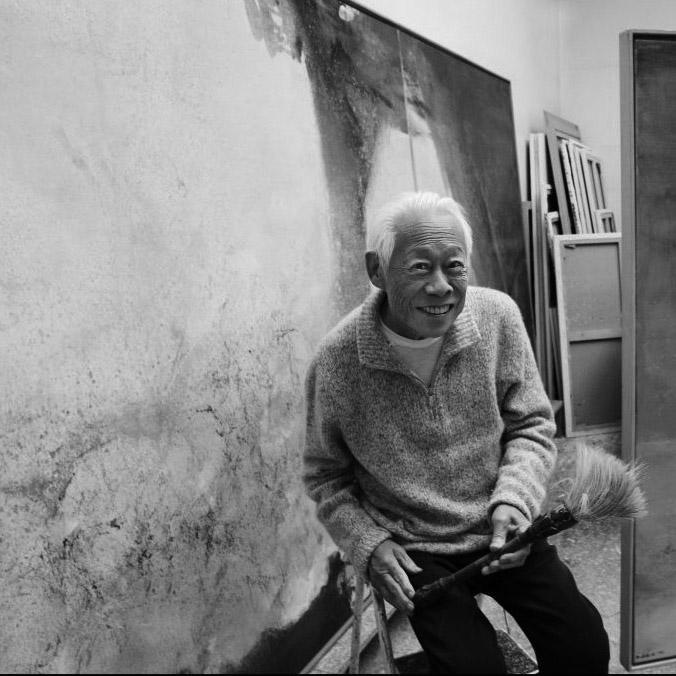
Zao Wou-Ki (pronounced «Zaō Wú-jí»), born on 13 February 1921 in Beijing, China, and died on 9 April 2013 in Nyon, Switzerland, was one of the most important and celebrated artists of the 20th century. A Chinese-French painter, he is renowned for having created a unique and powerful body of work, fusing Chinese pictorial traditions with Western lyrical abstraction.
Youth and Training in China
Born into a family of intellectuals and scholars, Zao Wou-Ki was encouraged from an early age to develop his artistic sensibility. His grandfather was a renowned calligrapher and his father, although a banker, collected art. In 1935, at the age of 14, he enrolled at the National School of Fine Arts in Hangzhou (now the Chinese Academy of Fine Arts), at the instigation of his father, who had recognised his precocious talent.
During his six years of study, he received rigorous academic training, combining traditional Chinese techniques (calligraphy, ink painting) with Western methods taught by teachers trained in France. Although he mastered the rules of Chinese art, he became increasingly frustrated by the constraints and lack of freedom of expression he perceived in this tradition. It was during this period that he discovered Western painting through reproductions, and artists such as Matisse, Cézanne and Picasso irresistibly attracted him with their boldness and modernity.
Arrival in Paris and the Revelation of Abstraction
In 1948, at the age of 27, Zao Wou-Ki realised his dream and moved to Paris, the art capital of the world at the time, with his first wife, Lalan. This move marked a decisive turning point. He enrolled at the Académie de la Grande Chaumière and frequented the museums, galleries and cafés where the great names of modern art met. He rubbed shoulders with the likes of Pierre Soulages, Hans Hartung, Nicolas de Staël, Joan Miró, and Alberto Giacometti, who was to become a close friend.
His early works in Paris were still figurative, influenced by Klee and Cézanne. He painted landscapes, still lifes and portraits. However, the artistic freedom he discovered in Paris soon encouraged him to explore new avenues. Chinese ideograms, which he had put to one side, reappeared in his canvases in a stylised, almost abstract form, marking the first stage in his formal liberation.
The birth of Lyrical Abstraction
From 1951-1952, Zao Wou-Ki abandoned figurative art altogether. This was the period known as the «Tributes», during which he explored signs and symbols. His encounter with lyrical abstraction and American abstract expressionism (which he discovered on a trip to the United States in 1957) consolidated his conviction that art should express an inner emotion rather than represent the external world.
His canvases are transformed into vast fields of moving colours and shapes, where light and space are the real subjects. Chinese calligraphy, so fundamental to his native culture, is no longer used to write characters, but to give energy, rhythm and structure to his compositions. He describes his process as an attempt to «paint wind, light, water, space... life».
An International Career and Recognition
In the 1960s and 1970s, his style asserted itself. His canvases became larger and fuller, exuding a telluric force. He often used oil, with impastoed brushstrokes and transparencies reminiscent of the Indian ink technique. The titles of his canvases become generic («10.11.75», «Untitled»), inviting the viewer to interpret them freely and emotionally.
Zao Wou-Ki became a French citizen in 1964. His reputation spread far beyond France's borders. He regularly exhibited in Europe, the United States and Asia. He has received numerous awards, including the Grand Prix National des Arts in France in 1983 and the Praemium Imperiale in Japan in 2002.
Back to our Roots and Serenity
In his last decades, Zao Wou-Ki's work evolved towards greater serenity and simplification of form. The light became more ethereal, the colours softer. He often returned to using Indian ink on paper, showing a rediscovery and personal appropriation of his artistic roots.
Until the end of his life, Zao Wou-Ki never stopped painting, with inexhaustible energy and curiosity.
Heritage
Zao Wou-Ki's work is a tireless quest for the universal through personal expression. He has created a unique pictorial language that transcends cultural divides, proving that it is possible to reconcile a deep cultural identity with a radical openness to modernity. His canvases, imbued with poetry, lyricism and a profound meditation on nature and existence, continue to move and inspire generations. He remains one of the undisputed masters of lyrical abstraction, and a living symbol of the fertile exchange between Eastern and Western cultures.
Zao Wou-Ki (赵无极): The Bridge between East and West, a Soul in Search of Universality
Zao Wou-Ki (pronounced «Zaō Wú-jí»), born on 13 February 1921 in Beijing, China, and died on 9 April 2013 in Nyon, Switzerland, was one of the most important and celebrated artists of the 20th century. A Chinese-French painter, he is renowned for having created a unique and powerful body of work, fusing Chinese pictorial traditions with Western lyrical abstraction.
Youth and Training in China
Born into a family of intellectuals and scholars, Zao Wou-Ki was encouraged from an early age to develop his artistic sensibility. His grandfather was a renowned calligrapher and his father, although a banker, collected art. In 1935, at the age of 14, he enrolled at the National School of Fine Arts in Hangzhou (now the Chinese Academy of Fine Arts), at the instigation of his father, who had recognised his precocious talent.
During his six years of study, he received rigorous academic training, combining traditional Chinese techniques (calligraphy, ink painting) with Western methods taught by teachers trained in France. Although he mastered the rules of Chinese art, he became increasingly frustrated by the constraints and lack of freedom of expression he perceived in this tradition. It was during this period that he discovered Western painting through reproductions, and artists such as Matisse, Cézanne and Picasso irresistibly attracted him with their boldness and modernity.
Arrival in Paris and the Revelation of Abstraction
In 1948, at the age of 27, Zao Wou-Ki realised his dream and moved to Paris, the art capital of the world at the time, with his first wife, Lalan. This move marked a decisive turning point. He enrolled at the Académie de la Grande Chaumière and frequented the museums, galleries and cafés where the great names of modern art met. He rubbed shoulders with the likes of Pierre Soulages, Hans Hartung, Nicolas de Staël, Joan Miró, and Alberto Giacometti, who was to become a close friend.
His early works in Paris were still figurative, influenced by Klee and Cézanne. He painted landscapes, still lifes and portraits. However, the artistic freedom he discovered in Paris soon encouraged him to explore new avenues. Chinese ideograms, which he had put to one side, reappeared in his canvases in a stylised, almost abstract form, marking the first stage in his formal liberation.
The birth of Lyrical Abstraction
From 1951-1952, Zao Wou-Ki abandoned figurative art altogether. This was the period known as the «Tributes», during which he explored signs and symbols. His encounter with lyrical abstraction and American abstract expressionism (which he discovered on a trip to the United States in 1957) consolidated his conviction that art should express an inner emotion rather than represent the external world.
His canvases are transformed into vast fields of moving colours and shapes, where light and space are the real subjects. Chinese calligraphy, so fundamental to his native culture, is no longer used to write characters, but to give energy, rhythm and structure to his compositions. He describes his process as an attempt to «paint wind, light, water, space... life».
An International Career and Recognition
In the 1960s and 1970s, his style asserted itself. His canvases became larger and fuller, exuding a telluric force. He often used oil, with impastoed brushstrokes and transparencies reminiscent of the Indian ink technique. The titles of his canvases become generic («10.11.75», «Untitled»), inviting the viewer to interpret them freely and emotionally.
Zao Wou-Ki became a French citizen in 1964. His reputation spread far beyond France's borders. He regularly exhibited in Europe, the United States and Asia. He has received numerous awards, including the Grand Prix National des Arts in France in 1983 and the Praemium Imperiale in Japan in 2002.
Back to our Roots and Serenity
In his last decades, Zao Wou-Ki's work evolved towards greater serenity and simplification of form. The light became more ethereal, the colours softer. He often returned to using Indian ink on paper, showing a rediscovery and personal appropriation of his artistic roots.
Until the end of his life, Zao Wou-Ki never stopped painting, with inexhaustible energy and curiosity.
.
Heritage
Zao Wou-Ki's work is a tireless quest for the universal through personal expression. He has created a unique pictorial language that transcends cultural divides, proving that it is possible to reconcile a deep cultural identity with a radical openness to modernity. His canvases, imbued with poetry, lyricism and a profound meditation on nature and existence, continue to move and inspire generations. He remains one of the undisputed masters of lyrical abstraction, and a living symbol of the fertile exchange between Eastern and Western cultures.
 French
  English