
Nobuyoshi Araki (born 1940): The subversive poet of everyday life and desire
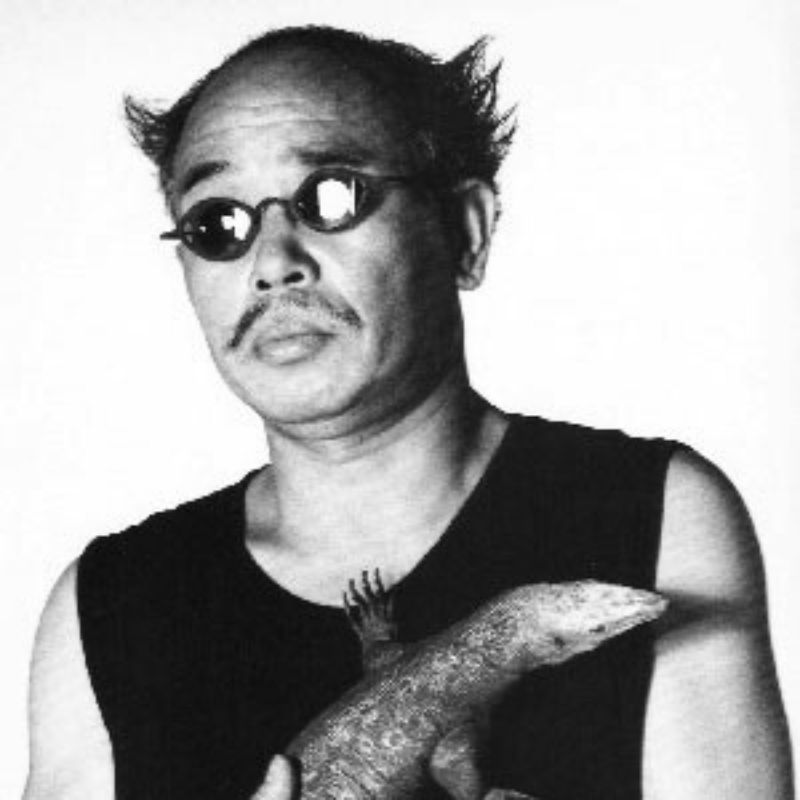
Nobuyoshi Araki is one of the most famous, prolific and controversial Japanese photographers of his generation. His immense and often provocative body of work unabashedly explores the many facets of everyday Japanese life, from erotic desire and death to the intimate and the banal. Renowned for his direct, raw and deeply personal style, Araki is an artist who blurs the boundaries between art, private life and document.
Early career
Born in Tokyo in 1940, Nobuyoshi Araki studied photography and film at Chiba University. After graduating in 1963, he worked as a commercial photographer at Dentsu, Japan's largest advertising agency. It was during this period that he began to develop
his personal style, documenting his own life and environment with an almost diaristic approach.
His first recognition came with his «Satchin» series (1964), in which he photographed children from working-class neighbourhoods in Tokyo. This work won him the Taiyo Prize and marked the beginning of his reputation as a keen observer of Japanese society.
The Art of the Intimate and the Provocative: "Sentimental Journey" and Marriage
In 1971, Araki published Sentimental Journey, a ground-breaking photobook documenting his honeymoon with his wife, Yoko Aoki. This work is an unfiltered dive into the couple's intimacy, including scenes of nudity and sexuality. This book, of which only 1000 copies were self-published, is now considered a major work in the history of photography and a milestone in the photographic exploration of the intimate. It establishes Araki's method: direct, personal, sometimes voyeuristic photography that blurs the distinction between private life and creation.
The figure of Yoko, his muse and model, was central to his work until her death in 1990. Their relationship is immortalised in a multitude of photographs, culminating in the series «Winter Journey» (1991), which documents her last days and her funeral, exploring themes of love, loss and mortality with brutal honesty.
Themes and Obsessions : The I-photograph, Bondage and Flowers
Araki's work is characterised by several recurring obsessions:
- The «I-photograph» (Shiritsu shashin): A highly personal and subjective style in which the photographer is directly involved in what he is photographing, with his life and emotions at the heart of the subject.
- Eroticism and Bondage (Kinbaku): Araki is famous for his photographs of bound, often naked, women in sado-masochistic poses inspired by traditional Japanese bondage. These images, controversial and often accused of misogyny, are for Araki an exploration of desire, vulnerability and the beauty of the body. He claims an aesthetic and emotional approach rather than a purely sexual one.
- Les Fleurs et la Nature Morte: Less well known to the general public but just as important, his series of close-up flowers, often withered or cut, are meditations on ephemeral beauty, life and death. They dialogue with his nude portraits, symbolising the same duality.
- Tokyo Street Scenes: The city of Tokyo is a character in its own right in Araki's work. Araki captures the chaos, energy, strangeness and solitude of the streets of the Japanese capital, offering an unvarnished portrait of contemporary urban society.
A prolific and controversial artist
With over 500 books published, Araki is incredibly prolific. His work has been exhibited in galleries and museums around the world, including the Guggenheim Museum in New York, the Tate Modern in London and the Centre Pompidou in Paris.
Although critically and institutionally acclaimed for his influence and daring, he remains a controversial figure, particularly in the West, where his bondage images have often been misinterpreted or censored. In Japan, he has also been in trouble with the law for obscenity.
Nobuyoshi Araki is an artist who forces confrontation. His work, complex and sometimes disturbing, encourages us to question our own limits, our desires, our relationship with the body and with death. He remains an essential and uncompromising witness to his time and culture, a brilliant provocateur whose vision continues to leave its mark on contemporary photography.
Nobuyoshi Araki (born 1940): The subversive poet of everyday life and desire
Nobuyoshi Araki is one of the most famous, prolific and controversial Japanese photographers of his generation. His immense and often provocative body of work unabashedly explores the many facets of everyday Japanese life, from erotic desire and death to the intimate and the banal. Renowned for his direct, raw and deeply personal style, Araki is an artist who blurs the boundaries between art, private life and document.
Early career
Born in Tokyo in 1940, Nobuyoshi Araki studied photography and film at Chiba University. After graduating in 1963, he worked as a commercial photographer at Dentsu, Japan's largest advertising agency. It was during this period that he began to develop
his personal style, documenting his own life and environment with an almost diaristic approach.
His first recognition came with his «Satchin» series (1964), in which he photographed children from working-class neighbourhoods in Tokyo. This work won him the Taiyo Prize and marked the beginning of his reputation as a keen observer of Japanese society.
The Art of the Intimate and the Provocative: "Sentimental Journey" and Marriage
In 1971, Araki published Sentimental Journey, a ground-breaking photobook documenting his honeymoon with his wife, Yoko Aoki. This work is an unfiltered dive into the couple's intimacy, including scenes of nudity and sexuality. This book, of which only 1000 copies were self-published, is now considered a major work in the history of photography and a milestone in the photographic exploration of the intimate. It establishes Araki's method: direct, personal, sometimes voyeuristic photography that blurs the distinction between private life and creation.
The figure of Yoko, his muse and model, was central to his work until her death in 1990. Their relationship is immortalised in a multitude of photographs, culminating in the series «Winter Journey» (1991), which documents her last days and her funeral, exploring themes of love, loss and mortality with brutal honesty.
Themes and Obsessions : The I-photograph, Bondage and Flowers
Araki's work is characterised by several recurring obsessions:
- The «I-photograph» (Shiritsu shashin): A highly personal and subjective style in which the photographer is directly involved in what he is photographing, with his life and emotions at the heart of the subject.
- Eroticism and Bondage (Kinbaku): Araki is famous for his photographs of bound, often naked, women in sado-masochistic poses inspired by traditional Japanese bondage. These images, controversial and often accused of misogyny, are for Araki an exploration of desire, vulnerability and the beauty of the body. He claims an aesthetic and emotional approach rather than a purely sexual one.
- Les Fleurs et la Nature Morte: Less well known to the general public but just as important, his series of close-up flowers, often withered or cut, are meditations on ephemeral beauty, life and death. They dialogue with his nude portraits, symbolising the same duality.
- Tokyo Street Scenes: The city of Tokyo is a character in its own right in Araki's work. Araki captures the chaos, energy, strangeness and solitude of the streets of the Japanese capital, offering an unvarnished portrait of contemporary urban society.
A prolific and controversial artist
With over 500 books published, Araki is incredibly prolific. His work has been exhibited in galleries and museums around the world, including the Guggenheim Museum in New York, the Tate Modern in London and the Centre Pompidou in Paris.
Although critically and institutionally acclaimed for his influence and daring, he remains a controversial figure, particularly in the West, where his bondage images have often been misinterpreted or censored. In Japan, he has also been in trouble with the law for obscenity.
Nobuyoshi Araki is an artist who forces confrontation. His work, complex and sometimes disturbing, encourages us to question our own limits, our desires, our relationship with the body and with death. He remains an essential and uncompromising witness to his time and culture, a brilliant provocateur whose vision continues to leave its mark on contemporary photography.
 French
  English