
Larry Clark (born 1943): The Crude and Uncompromising Chronicler of Youth on the Margins
Larry Clark is an American photographer and filmmaker whose work, both celebrated and controversial, has had a profound impact on the history of art and film. Renowned for his raw, unidealised and often disturbing vision of American youth on the margins - struggling with drugs, violence and sex - Clark has established himself as an essential chronicler of social realities that are often obscured.
Personal and troubled beginnings: "Tulsa"."
Born in 1943 in Tulsa, Oklahoma, Larry Clark grew up in an environment marked by addictions and risky behaviour. His father was an itinerant photographer and his mother a home-based baby photographer, which exposed him to photography from an early age.
After serving in the US Army, he returned to Tulsa in the 1960s and began documenting his own circle of friends and teenagers. These young people, often from disadvantaged backgrounds, struggled with hard drug use (amphetamines), violence, crime and early, unprotected sex. The result of this intimate and immersive work was published in 1971 in his emblematic book «Tulsa».
«Tulsa» is a shock. With his disarmingly frank black and white photographs, Clark shows a reality that had previously been ignored or censored. He does not judge his subjects; he documents them with a sometimes disturbing intimacy, making himself an observant participant. This book has been hailed by critics as a major work of documentary photography, influencing generations of photographers and filmmakers with its unvarnished approach.
Continuous exploration of youth and margins
After «Tulsa», Clark continued to explore similar themes. In 1983, he published «Teenage Lust», A collection of even more explicit images, combining photographs of young people, nudes and sexual scenes, often accompanied by texts. This book accentuated his reputation as a provocative photographer, challenging social and moral taboos. He continued this exploration with other works such as «Punks, Thugs and Suckahs» (1992) and «The Perfect Childhood» (1995).
His work is often compared to that of Nan Goldin or William Eggleston for its diaristic approach and its exploration of American subcultures. Clark is a photographer who «lives» with his subjects, establishing a relationship of trust that allows him to capture moments of rare authenticity.
Le Passage au Cinéma: "Kids" and its Impact
In the mid-1990s, Larry Clark turned to film, bringing his documentary vision and raw aesthetic to the big screen. His first film, Kids (1995), scripted by Harmony Korine, was an earthquake. Over the course of a single day, the film follows a group of New York teenagers with no bearings, exploring their lives of sex, drugs, recklessness and violence without concession.
Like «Tulsa» before it, «Kids» caused a major scandal. It was hailed for its striking realism and honest portrayal of lost youth, but also criticised for its explicit content and apparent lack of morality. The film was a critical and commercial success, launching
the careers of actors such as Rosario Dawson and Chloë Sevigny, and left its mark on an entire generation.
Clark went on to make other films with similar themes, such as «Another Day in Paradise» (1998), «Bully» (2001), «Ken Park» (2002) and most recently «The Smell of Us» (2014), confirming his status as a controversial but influential filmmaker.
The Legacy of a Radical Artist
Larry Clark's work, whether photographic or cinematic, is a powerful and often uncomfortable testimony to the dark corners of society. He has forced the public and critics alike to face up to realities that many would prefer to ignore. His direct, unvarnished style has become a benchmark for the depiction of disillusioned youth and underground cultures.
Despite the controversy, Larry Clark remains an artist whose artistic integrity and commitment to documenting the «real» have left an indelible mark on contemporary art. He is a tireless chronicler of marginal lives, offering a window on worlds that are often invisible, with an honesty that commands respect, even when his work disturbs us.
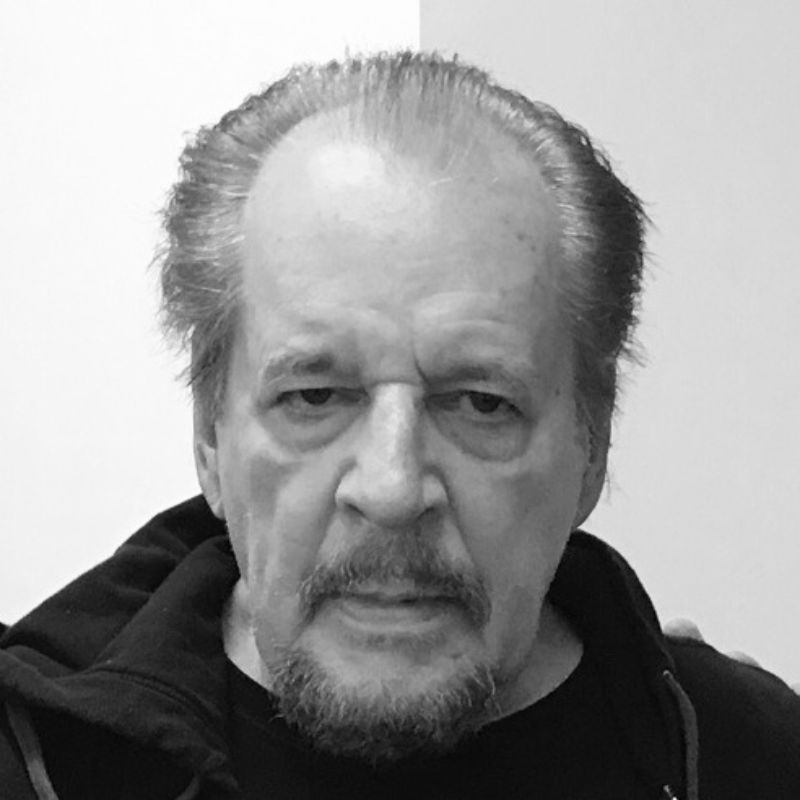
Larry Clark (born 1943): The Crude and Uncompromising Chronicler of Youth on the Margins
Larry Clark is an American photographer and filmmaker whose work, both celebrated and controversial, has had a profound impact on the history of art and film. Renowned for his raw, unidealised and often disturbing vision of American youth on the margins - struggling with drugs, violence and sex - Clark has established himself as an essential chronicler of social realities that are often obscured.
Personal and troubled beginnings: "Tulsa"."
Born in 1943 in Tulsa, Oklahoma, Larry Clark grew up in an environment marked by addictions and risky behaviour. His father was an itinerant photographer and his mother a home-based baby photographer, which exposed him to photography from an early age.
After serving in the US Army, he returned to Tulsa in the 1960s and began documenting his own circle of friends and teenagers. These young people, often from disadvantaged backgrounds, struggled with hard drug use (amphetamines), violence, crime and early, unprotected sex. The result of this intimate and immersive work was published in 1971 in his emblematic book «Tulsa».
«Tulsa» is a shock. With his disarmingly frank black and white photographs, Clark shows a reality that had previously been ignored or censored. He does not judge his subjects; he documents them with a sometimes disturbing intimacy, making himself an observant participant. This book has been hailed by critics as a major work of documentary photography, influencing generations of photographers and filmmakers with its unvarnished approach.
Continuous exploration of youth and margins
After «Tulsa», Clark continued to explore similar themes. In 1983, he published «Teenage Lust», A collection of even more explicit images, combining photographs of young people, nudes and sexual scenes, often accompanied by texts. This book accentuated his reputation as a provocative photographer, challenging social and moral taboos. He continued this exploration with other works such as «Punks, Thugs and Suckahs» (1992) and «The Perfect Childhood» (1995).
His work is often compared to that of Nan Goldin or William Eggleston for its diaristic approach and its exploration of American subcultures. Clark is a photographer who «lives» with his subjects, establishing a relationship of trust that allows him to capture moments of rare authenticity.
Le Passage au Cinéma: "Kids" and its Impact
In the mid-1990s, Larry Clark turned to film, bringing his documentary vision and raw aesthetic to the big screen. His first film, Kids (1995), scripted by Harmony Korine, was an earthquake. Over the course of a single day, the film follows a group of New York teenagers with no bearings, exploring their lives of sex, drugs, recklessness and violence without concession.
Like «Tulsa» before it, «Kids» caused a major scandal. It was hailed for its striking realism and honest portrayal of lost youth, but also criticised for its explicit content and apparent lack of morality. The film was a critical and commercial success, launching
the careers of actors such as Rosario Dawson and Chloë Sevigny, and left its mark on an entire generation.
Clark went on to make other films with similar themes, such as «Another Day in Paradise» (1998), «Bully» (2001), «Ken Park» (2002) and most recently «The Smell of Us» (2014), confirming his status as a controversial but influential filmmaker.
The Legacy of a Radical Artist
Larry Clark's work, whether photographic or cinematic, is a powerful and often uncomfortable testimony to the dark corners of society. He has forced the public and critics alike to face up to realities that many would prefer to ignore. His direct, unvarnished style has become a benchmark for the depiction of disillusioned youth and underground cultures.
Despite the controversy, Larry Clark remains an artist whose artistic integrity and commitment to documenting the «real» have left an indelible mark on contemporary art. He is a tireless chronicler of marginal lives, offering a window on worlds that are often invisible, with an honesty that commands respect, even when his work disturbs us.
 French
  English