
Jean Fautrier (1898 - 1964): The Pioneer of the Informal and the Painter of the Tragic Human Transformation
Jean Fautrier is a major figure in twentieth-century art, an artist whose work is at once powerful, sombre and of rare emotional intensity. A precursor of informal art and lyrical abstraction, he explored pictorial matter to express the depths of the human condition, particularly in the face of the horror of conflict.
A Youth Marked by Drama and Independence
Born in Paris in 1898, Jean Fautrier had a difficult childhood. His father died when he was very young, and he was brought up by his mother and grandmother. At the age of 15, he moved to London, where he attended the Royal Academy of Arts and the Slade School of Fine Art, but soon left these institutions, preferring a self-taught education. His independence of spirit and his desire not to submit to any particular school or movement were to mark his entire career.
Returning to France after the First World War, he settled in Paris and began exhibiting in the 1920s. His works from this period were often figurative, depicting dark landscapes, tortured bodies and melancholy still lifes, with a strong preoccupation with matter and texture. He developed a technique in which the paste was generous, worked with a knife, creating striking reliefs and luminous effects.
Artface and the Hostages: Witness to Horror
The Second World War marked a decisive and tragic turning point in Fautrier's work. As a refugee in the Vallée de la Chevreuse, near Châtenay-Malabry, he witnessed the atrocities committed by the German occupiers, in particular the executions of hostages in the nearby forest. Deeply moved by these events, he produced his most famous and poignant series between 1943 and 1945: «The Hostages».
In this series, Fautrier moved away from recognisable figuration to achieve a form of expressive and tragic abstraction. The «Hostages» are anonymous heads, disfigured by suffering, fashioned in a thick, almost carnal paste, with reliefs that evoke lacerated flesh and eyes wide with horror. The colours are pale, greyish, sometimes enhanced by touches of blood red or sickly yellow. Although not directly representative, these works manage to communicate an existential anguish and universal pain. They are a powerful testimony to the unspeakable and are considered to be essential precursors of informal art and tachism.
A Pioneer of Informal Art
After the war, Fautrier continued to explore the possibilities of pictorial matter. He was recognised as one of the pioneers of informal art, a movement that rejected geometry and defined forms in favour of the spontaneity of gesture and the expressiveness of the material. He developed mixed techniques, using impastos of plaster, glue, powders and pigments to create rich, vibrant textures. His works, often composed in series («Hauts reliefs», «Objets», «Partis pris», «Nus», «Portes»), tackle a variety of themes with the same emotional depth.
Recognition and Legacy
Although sometimes controversial and for a long time solitary in his approach, Jean Fautrier has gradually gained international recognition. He is represented in the major
collections and museums around the world. In 1960, he was awarded the Grand Prix International de Peinture at the Venice Biennale, confirming his status as a major artist.
Jean Fautrier died in 1964 in Châtenay-Malabry. His work remains a radical exploration of matter and emotion. He invites us to look beyond appearances, to plumb the depths of the human soul and confront the beauty and terror of the world with a rare authenticity. His influence on the generations of artists who followed him is undeniable, making him an essential figure in the history of modern art.
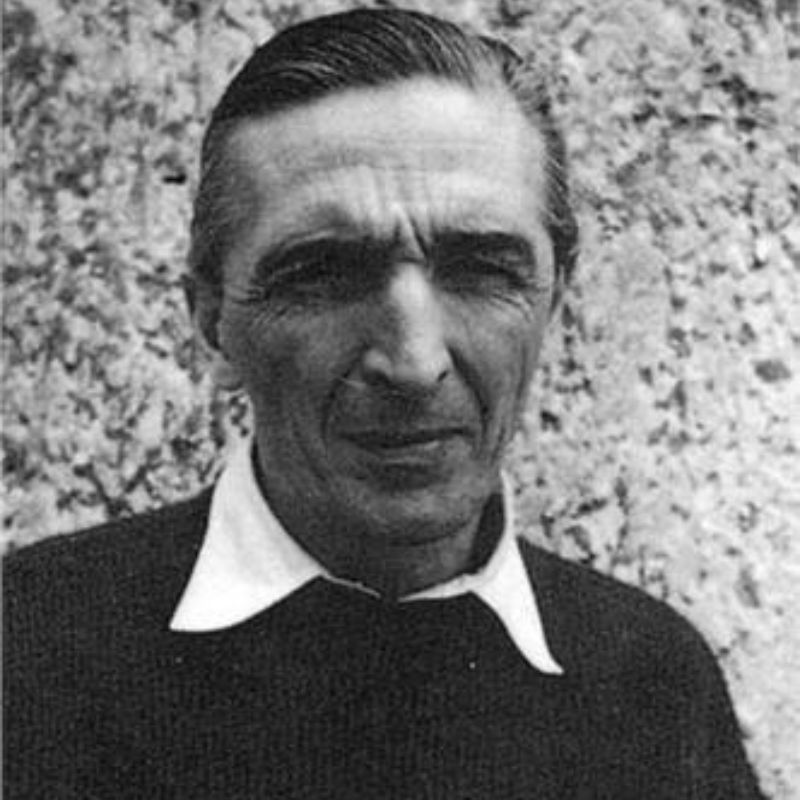
BIOGRAPHY of Jean Fautrier
Jean Fautrier (1898 - 1964): The Pioneer of the Informal and the Painter of the Tragic Human
Jean Fautrier is a major figure in twentieth-century art, an artist whose work is at once powerful, sombre and of rare emotional intensity. A precursor of informal art and lyrical abstraction, he explored pictorial matter to express the depths of the human condition, particularly in the face of the horror of conflict.
A Youth Marked by Drama and Independence
Born in Paris in 1898, Jean Fautrier had a difficult childhood. His father died when he was very young, and he was brought up by his mother and grandmother. At the age of 15, he moved to London, where he attended the Royal Academy of Arts and the Slade School of Fine Art, but soon left these institutions, preferring a self-taught education. His independence of spirit and his desire not to submit to any particular school or movement were to mark his entire career.
Returning to France after the First World War, he settled in Paris and began exhibiting in the 1920s. His works from this period were often figurative, depicting dark landscapes, tortured bodies and melancholy still lifes, with a strong preoccupation with matter and texture. He developed a technique in which the paste was generous, worked with a knife, creating striking reliefs and luminous effects.
Artface and the Hostages: Witness to Horror
The Second World War marked a decisive and tragic turning point in Fautrier's work. As a refugee in the Vallée de la Chevreuse, near Châtenay-Malabry, he witnessed the atrocities committed by the German occupiers, in particular the executions of hostages in the nearby forest. Deeply moved by these events, he produced his most famous and poignant series between 1943 and 1945: «The Hostages».
In this series, Fautrier moved away from recognisable figuration to achieve a form of expressive and tragic abstraction. The «Hostages» are anonymous heads, disfigured by suffering, fashioned in a thick, almost carnal paste, with reliefs that evoke lacerated flesh and eyes wide with horror. The colours are pale, greyish, sometimes enhanced by touches of blood red or sickly yellow. Although not directly representative, these works manage to communicate an existential anguish and universal pain. They are a powerful testimony to the unspeakable and are considered to be essential precursors of informal art and tachism.
A Pioneer of Informal Art
After the war, Fautrier continued to explore the possibilities of pictorial matter. He was recognised as one of the pioneers of informal art, a movement that rejected geometry and defined forms in favour of the spontaneity of gesture and the expressiveness of the material. He developed mixed techniques, using impastos of plaster, glue, powders and pigments to create rich, vibrant textures. His works, often composed in series («Hauts reliefs», «Objets», «Partis pris», «Nus», «Portes»), tackle a variety of themes with the same emotional depth.
Recognition and Legacy
Although sometimes controversial and for a long time solitary in his approach, Jean Fautrier has gradually gained international recognition. He is represented in the major
collections and museums around the world. In 1960, he was awarded the Grand Prix International de Peinture at the Venice Biennale, confirming his status as a major artist.
Jean Fautrier died in 1964 in Châtenay-Malabry. His work remains a radical exploration of matter and emotion. He invites us to look beyond appearances, to plumb the depths of the human soul and confront the beauty and terror of the world with a rare authenticity. His influence on the generations of artists who followed him is undeniable, making him an essential figure in the history of modern art.
 French
  English