
Gérard Schneider (1896 - 1986): The Energetic Poet of Informal Gesture
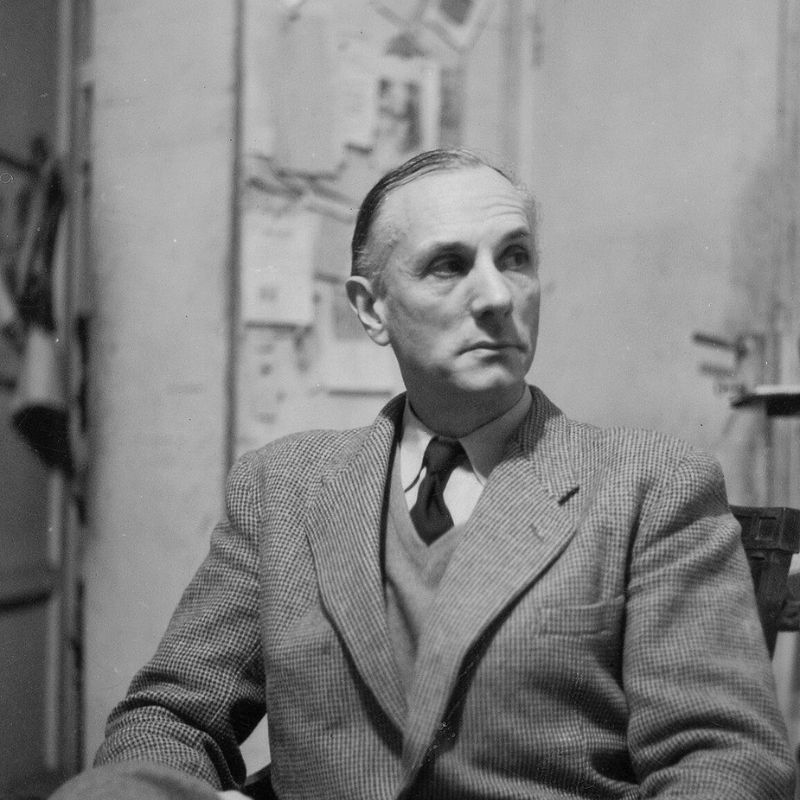
Gérard Schneider was one of the pioneers and most influential figures of lyrical abstraction and informal art in post-war France. His work, characterised by strong gestures, vibrant colours and dynamic composition, expresses vital energy and deep emotion, bearing witness to an unceasing quest for artistic freedom.
Swiss roots and artistic training
Born in 1896 in Sainte-Croix, Switzerland, Gérard Schneider moved to Paris at a very young age in 1916. He enrolled at the Beaux-Arts and the École des Arts Décoratifs, where he developed a solid classical training. However, like many artists of his generation, he soon felt cramped by the academic canons and explored different avenues, from post-Cubist figuration to surrealism.
At the start of his career, his influences ranged from Cézanne to Picasso, but it was constant experimentation that forged his approach. He explored colour, line and form, seeking to free himself from mimetic representation to achieve a more direct and universal expression.
The Transition to Abstraction and the Birth of the Informal
The decisive turning point in Schneider's work came in the late 1930s and early 1940s. After the Second World War, he became fully committed to abstraction. Along with artists such as Jean Fautrier, Hans Hartung, Pierre Soulages and Wols, he was one of the leading figures in what would later be known as lyrical abstraction or art informel. This movement rejected geometric construction and pre-established forms in favour of the spontaneous expression of gesture, the intensity of colour and the richness of matter.
Schneider's painting is characterised by :
- A broad, dynamic gesture: The brushstrokes are lively, sometimes violent, tracing arabesques or shapes that seem to extend beyond the canvas.
- Vibrant, contrasting colours: He uses rich palettes, where yellows, reds, deep blues and intense blacks clash and respond to each other, creating a strong visual tension.
- Her non-figurative compositions evoke telluric forces, cosmic movements and inner emotions. Her canvases seem to vibrate with an energy that is both contained and liberated.
- An exploration of light and space: Despite the abstraction, he manages to create an impression of depth and movement, inviting the viewer to immerse themselves in contemplation.
A coherent body of work and international recognition
Gérard Schneider quickly gained international recognition. From the end of the 1940s, he regularly exhibited in galleries and museums in France, Europe and the United States. He took part in major abstract art events such as the Venice Biennale and Documenta in Kassel. His work has been hailed for its originality and expressive power.
His painting, while evolving over the decades, maintains a remarkable stylistic coherence. He continues to explore variations in gesture and colour, creating works that are visual dazzlers. He uses different techniques, sometimes gouache on paper, to refine his chromatic and gestural research.
Heritage
Gérard Schneider died in Paris in 1986. He left behind a considerable and timeless body of work, which continues to fascinate with its energy and depth. He was an essential link in the history of twentieth-century art, helping to free painting from figurative constraints and elevate it to the level of pure expression. His art is a powerful testimony to man's ability to translate the inexpressible through colour and movement, making him one of the great masters of lyrical abstraction.
Gérard Schneider (1896 - 1986): The Energetic Poet of Informal Gesture
Gérard Schneider was one of the pioneers and most influential figures of lyrical abstraction and informal art in post-war France. His work, characterised by strong gestures, vibrant colours and dynamic composition, expresses vital energy and deep emotion, bearing witness to an unceasing quest for artistic freedom.
Swiss roots and artistic training
Born in 1896 in Sainte-Croix, Switzerland, Gérard Schneider moved to Paris at a very young age in 1916. He enrolled at the Beaux-Arts and the École des Arts Décoratifs, where he developed a solid classical training. However, like many artists of his generation, he soon felt cramped by the academic canons and explored different avenues, from post-Cubist figuration to surrealism.
At the start of his career, his influences ranged from Cézanne to Picasso, but it was constant experimentation that forged his approach. He explored colour, line and form, seeking to free himself from mimetic representation to achieve a more direct and universal expression.
The Transition to Abstraction and the Birth of the Informal
The decisive turning point in Schneider's work came in the late 1930s and early 1940s. After the Second World War, he became fully committed to abstraction. Along with artists such as Jean Fautrier, Hans Hartung, Pierre Soulages and Wols, he was one of the leading figures in what would later be known as lyrical abstraction or art informel. This movement rejected geometric construction and pre-established forms in favour of the spontaneous expression of gesture, the intensity of colour and the richness of matter.
Schneider's painting is characterised by :
- A broad, dynamic gesture: The brushstrokes are lively, sometimes violent, tracing arabesques or shapes that seem to extend beyond the canvas.
- Vibrant, contrasting colours: He uses rich palettes, where yellows, reds, deep blues and intense blacks clash and respond to each other, creating a strong visual tension.
- Her non-figurative compositions evoke telluric forces, cosmic movements and inner emotions. Her canvases seem to vibrate with an energy that is both contained and liberated.
- An exploration of light and space: Despite the abstraction, he manages to create an impression of depth and movement, inviting the viewer to immerse themselves in contemplation.
A coherent body of work and international recognition
Gérard Schneider quickly gained international recognition. From the end of the 1940s, he regularly exhibited in galleries and museums in France, Europe and the United States. He took part in major abstract art events such as the Venice Biennale and Documenta in Kassel. His work has been hailed for its originality and expressive power.
His painting, while evolving over the decades, maintains a remarkable stylistic coherence. He continues to explore variations in gesture and colour, creating works that are visual dazzlers. He uses different techniques, sometimes gouache on paper, to refine his chromatic and gestural research.
Heritage
Gérard Schneider died in Paris in 1986. He left behind a considerable and timeless body of work, which continues to fascinate with its energy and depth. He was an essential link in the history of twentieth-century art, helping to free painting from figurative constraints and elevate it to the level of pure expression. His art is a powerful testimony to man's ability to translate the inexpressible through colour and movement, making him one of the great masters of lyrical abstraction.
 French
  English