
César (Baldaccini) (1921 - 1998): The Sculptor of Matter and Transformation
César Baldaccini, universally known by his pseudonym César, is one of the major French sculptors of the 20th century. An emblematic figure of the Nouveau Réalisme movement, he revolutionised sculpture by appropriating industrial materials and everyday objects, defying convention with audacity and a keen sense of provocation. His work is a constant exploration of matter, transformation and the meaning of the object in consumer society.
From humble origins to the discovery of metal
Born in Marseilles in 1921 into a family of modest Italian origin, César began his life as a labourer. It was in the late 1930s that he discovered welding, a technique that would become the cornerstone of his work. After studying at the École des Beaux-Arts in Marseille, then at the École Nationale Supérieure des Beaux-Arts in Paris (from 1943), he quickly became interested in sculpture.
His first works, in the 1940s and early 1950s, were still classical, but he began to experiment with salvaged materials and welding techniques. He produced figurative sculptures, often of the female nude, but already with a surface treatment that suggested a search for texture and roughness.
Welded Irons: The Birth of a Style
The major turning point came in the mid-1950s. César began to weld together pieces of salvaged metal (scrap metal, pipes, bolts, plates) from car wrecks and industrial sites. These first «weldings» were animal (roosters, insects) or anthropomorphic figures, often gaunt and aggressive, revealing a raw expressive power. The work «Le Poisson» (1954) is emblematic of this period and of his early recognition.
He exhibited these «welded irons» and was quickly noticed for his originality and his break with sculptural traditions. He brought a new vitality to sculpture, connecting it directly to the industrial age and the emerging consumer society.
Compressions : New Realism and Provocation
In 1960, César struck a blow and became a major figure in the Nouveau Réalisme movement founded by critic Pierre Restany. He presented his first «Compressions» at the Salon de Mai: cars, motorbikes and other industrial objects compacted by a hydraulic press.
These works, which caused an uproar and fascination, were revolutionary in several respects:
- The dematerialisation of the object: The object loses its original function and form to become a block of densified matter, a testimony to industrial overabundance.
- Mechanical intervention: The artist uses the machine as a creative tool, questioning the role of the artist and the very definition of a work of art.
- A social and ecological dimension: Les Compressions was already questioning the notion of waste, mass production and recycling before its time.
Human Expansions and Footprints: An Ongoing Exploration
After the Compressions, César never stopped experimenting. In the 1960s, he created the «Expansions», in which he allowed the expanding polyurethane foam to solidify freely, creating organic, random shapes. It's the opposite of compression, an ode to unfolding matter.
In the 1960s and 1970s, he also produced «Empreintes humaines», direct casts of his own body or those of his close friends and family (fists, thumbs, breasts). The most famous is «Le Pouce» (1965), a gigantic reproduction of his own thumb, which has become an icon of contemporary art and a symbol of individuality and monumentality.
A Monumental and Popular Heritage
César has exhibited in the world's leading galleries and museums. His work can be found in countless public and private collections. He has received numerous awards, including the Légion d'honneur. His art has left its mark on his era through its ability to transform the banal into the sublime, waste into a work of art, and to question our relationship with matter and consumption with humour and intelligence.
César died in Paris in 1998. His legacy is that of a daring, provocative and profoundly human artist, who opened up new avenues for sculpture, proving that art can be born from any material and reach into the heart of our everyday lives. He remains a towering figure in twentieth-century art, whose work continues to inspire reflection and admiration.
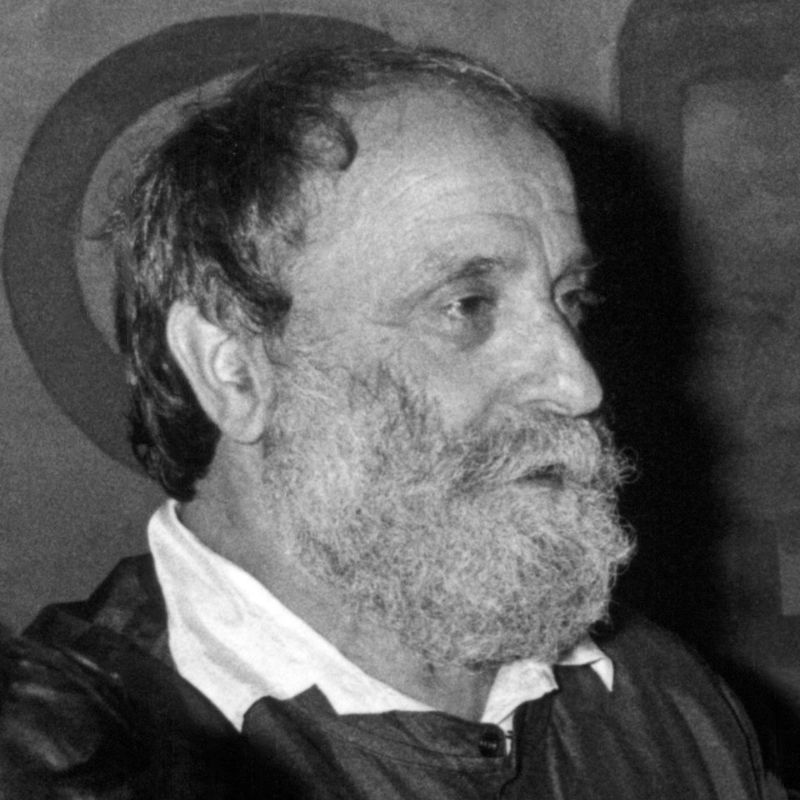
César (Baldaccini) (1921 - 1998): The Genial Sculptor of Matter and Transformation
César Baldaccini, universally known by his pseudonym César, is one of the major French sculptors of the 20th century. An emblematic figure of the Nouveau Réalisme movement, he revolutionised sculpture by appropriating industrial materials and everyday objects, defying convention with audacity and a keen sense of provocation. His work is a constant exploration of matter, transformation and the meaning of time.
the object in consumer society.
From humble origins to the discovery of metal
Born in Marseilles in 1921 into a family of modest Italian origin, César began his life as a labourer. It was in the late 1930s that he discovered welding, a technique that would become the cornerstone of his work. After studying at the École des Beaux-Arts in Marseille, then at the École Nationale Supérieure des Beaux-Arts in Paris (from 1943), he quickly became interested in sculpture.
His first works, in the 1940s and early 1950s, were still classical, but he began to experiment with salvaged materials and welding techniques. He produced figurative sculptures, often of the female nude, but already with a surface treatment that suggested a search for texture and roughness.
Welded Irons: The Birth of a Style
The major turning point came in the mid-1950s. César began to weld together pieces of salvaged metal (scrap metal, pipes, bolts, plates) from car wrecks and industrial sites. These first «weldings» were animal (roosters, insects) or anthropomorphic figures, often gaunt and aggressive, revealing a raw expressive power. The work «The Fish (1954) is emblematic of this period and its early recognition.
He exhibited these «welded irons» and was quickly noticed for his originality and his break with sculptural traditions. He brought a new vitality to sculpture, connecting it directly to the industrial age and the emerging consumer society.
Compressions : New Realism and Provocation
In 1960, César scored a major coup and became a leading figure in the Nouveau Réalisme movement founded by the critic Pierre Restany. He presented his first «Compressions» at the Salon de Mai: cars, motorbikes and other industrial objects compacted by a hydraulic press.
These works, which caused an uproar and fascination, were revolutionary in several respects:
- The dematerialisation of the object : The object loses its original function and form to become a block of densified matter, a testimony to industrial overabundance.
- Mechanical intervention : The artist uses the machine as a creative tool, questioning the role of the artist and the very definition of a work of art.
- A social and ecological dimension: Even before its time, Compressions was questioning the notion of waste, mass production and recycling.
Human Expansions and Footprints: An Ongoing Exploration
After the Compressions, César never stopped experimenting. In the 1960s, he created the «Expansions», where it allows the expanding polyurethane foam to solidify freely,
creating organic, random shapes. It's the opposite of compression, an ode to unfolding matter.
In the 1960s and 1970s, he also made «Human footprints», These included direct casts of his own body and those of his close friends and family (fists, thumbs, breasts). The most famous is «Le Pouce (1965), a gigantic reproduction of his own thumb that has become an icon of contemporary art and a symbol of individuality and monumentality.
A Monumental and Popular Heritage
César has exhibited in the world's leading galleries and museums. His work can be found in countless public and private collections. He has received numerous awards, including the Légion d'honneur. His art has marked its time through its ability to transform the banal into the sublime, waste into a work of art, and to question our relationship with matter and consumption with humour and intelligence.
César died in Paris in 1998. His legacy is that of a daring, provocative and profoundly human artist, who opened up new avenues for sculpture, proving that art can be born from any material and reach into the heart of our everyday lives. He remains a towering figure in twentieth-century art, whose work continues to inspire reflection and admiration.
 French
  English