A.R. Penck: The Archaeologist of the Modern Sign, Major Figure of German Neo-Expressionism.
Ralf Winkler was born in Dresden in 1939. He adopted the pseudonym A.R. Penck in 1968 after reading the work of the geologist Albrecht Penck. He was rejected from one of the art schools in the former German Democratic Republic and decided to pursue art as a self-taught artist in the 1950s. Until 1980, he lived in East Germany, where he was unable to exhibit his work publicly. As a result, he
clandestinely exported his work to West Berlin and Switzerland, where he regularly took part in the
exhibitions. Before emigrating to the West, A.R. Penck lived in London, Dublin and Düsseldorf. He died in Zurich, Switzerland, in 2017.
Considered a neo-expressionist, A.R. Penck is known for his paintings and sculptures characterised by simplified forms and figures and by neo-primitive symbols and motifs. He wanted to develop a pictorial language based on a system of signs that anyone could decode. This led him to a radical reduction of form to a series of stick figures with thick lines that he called «Standart» in reference to the signals associated with well-known standard symbols. He achieves an abstraction of complex socio-economic situations through a flat pictorial composition filled with symbolism. His work is not governed by a rational system or narrative, but by chaos and apparent emotion. In each drawing, each painting, he creates a purely visual space in which the imagination can develop and in which viewers can lose themselves.
In 1984, A.R. Penck took part in the Venice Biennale, as well as Documenta 5, 6, 7 and 9. Many solo exhibitions have been organised around the world, notably at the Kunsthalle in Bern, the Van Abbemuseum in Eindhoven, the Museum Ludwig in Cologne, the Gemeentemuseum in The Hague, the Irish Museum of Modern Art in Dublin, the Museo Rufino Tamayo in Mexico City, the Schirn Kunsthalle in Frankfurt, the Musée d'Art Moderne de la Ville de Paris, the Fondation Maeght in St. Paule in France and the Fosun Foundation in Shanghai, among others. His works are included in the permanent collections of international institutions such as the Museum of Modern Art in New York, the Tate Gallery in London, the Museum of Contemporary Art in Chicago, the Neue Nationalgalerie SMPK in Berlin and the Centre Pompidou in Paris.
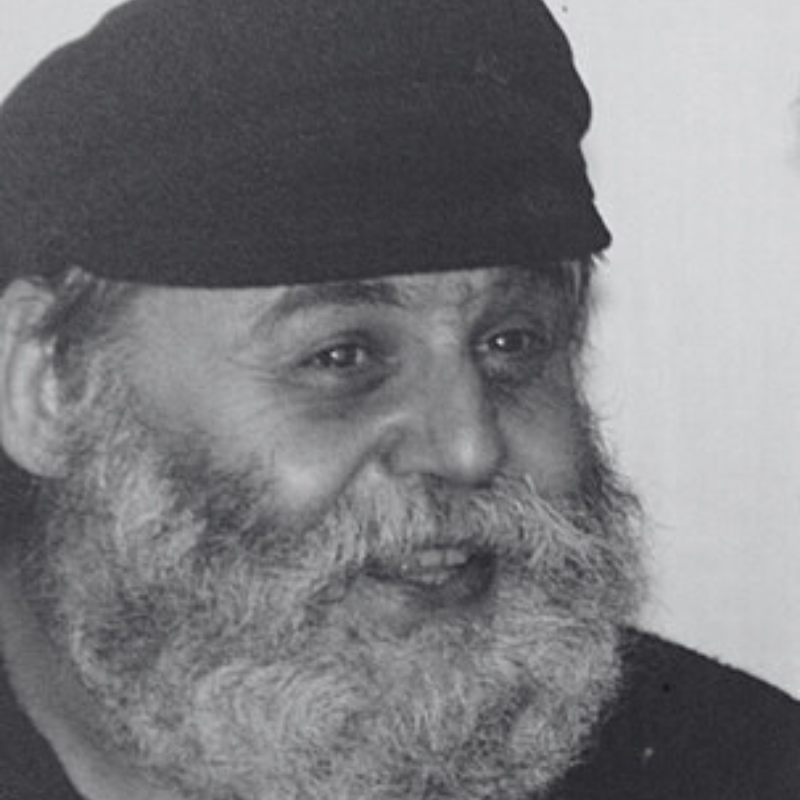
A.R. Penck: The Archaeologist of the Modern Sign, Major Figure of German Neo-Expressionism.
Ralf Winkler was born in Dresden in 1939. He adopted the pseudonym A.R. Penck in 1968 after reading the work of the geologist Albrecht Penck. He was rejected from one of the art schools in the former German Democratic Republic and decided to pursue art as a self-taught artist in the 1950s. Until 1980, he lived in East Germany, where he was unable to exhibit his work publicly. As a result, he
clandestinely exported his work to West Berlin and Switzerland, where he regularly took part in the
exhibitions. Before emigrating to the West, A.R. Penck lived in London, Dublin and Düsseldorf. He died in Zurich, Switzerland, in 2017.
Considered a neo-expressionist, A.R. Penck is known for his paintings and sculptures characterised by simplified forms and figures and by neo-primitive symbols and motifs. He wanted to develop a pictorial language based on a system of signs that anyone could decode. This led him to a radical reduction of form to a series of stick figures with thick lines that he called «Standart» in reference to the signals associated with well-known standard symbols. He achieves an abstraction of complex socio-economic situations through a flat pictorial composition filled with symbolism. His work is not governed by a rational system or narrative, but by chaos and apparent emotion. In each drawing, each painting, he creates a purely visual space in which the imagination can develop and in which viewers can lose themselves.
In 1984, A.R. Penck took part in the Venice Biennale, as well as Documenta 5, 6, 7 and 9. Many solo exhibitions have been organised around the world, notably at the Kunsthalle in Bern, the Van Abbemuseum in Eindhoven, the Museum Ludwig in Cologne, the Gemeentemuseum in The Hague, the Irish Museum of Modern Art in Dublin, the Museo Rufino Tamayo in Mexico City, the Schirn Kunsthalle in Frankfurt, the Musée d'Art Moderne de la Ville de Paris, the Fondation Maeght in St. Paule in France and the Fosun Foundation in Shanghai, among others. His works are included in the permanent collections of international institutions such as the Museum of Modern Art in New York, the Tate Gallery in London, the Museum of Contemporary Art in Chicago, the Neue Nationalgalerie SMPK in Berlin and the Centre Pompidou in Paris.
 French
  English