Jean Messagier (1920 - 1999): The Lyrical Painter of Nature in Motion
Jean Messagier was a major French artist of the second half of the 20th century, whose work, at the crossroads of lyrical abstraction and spontaneous figuration, celebrated nature, its landscapes, its light and its vital energies. He is renowned for his gestural, colourful painting, imbued with great freedom, in which matter and movement are in constant dialogue.
Youth and First Explorations
Born in Paris in 1920, Jean Messagier showed a keen interest in art from an early age. He studied at the Beaux-Arts de Paris and the Académie de la Grande Chaumière. His first works, in the 1940s, were still influenced by figurative art. But he soon moved away from classical representation, seeking to capture not the appearance of things, but their essence, their movement, their breath.
He took an active part in post-war artistic life in Paris, making friends with artists and critics who left their mark on the period, particularly those associated with the Galerie de France.
The Renewal of Lyrical Abstraction
It was in the 1950s that Jean Messagier developed his characteristic style, becoming part of the lyrical abstraction or art informel movement, alongside artists such as Pierre Soulages, Hans Hartung and Olivier Debré. However, his approach is distinguished by a desire to maintain a link, however tenuous, with the real world and nature. He spoke of «landscapes», «instants», or «gardens» for his canvases, not as reproductions, but as sensory interpretations.
His paintings are characterised by :
- A broad, spontaneous gesture: Messagier unleashes colour on canvas with boundless energy, using large brushstrokes, wide brushes, or even applying the paint directly.
- Bright, luminous colours: His palette is often bright, fresh and joyful, evoking the changing hues of the seasons, the reflections of water, the glint of sunlight. He is a true colourist.
- A dynamic composition: His works are imbued with movement, a vitality that suggests the wind, water and the growth of plants. The forms, though abstract, seem to be organised in an organic ballet.
- The paint is often applied in thin, transparent layers, sometimes thickened to allow the light to play with the pigments and create effects of depth.
Nature as an Inexhaustible Source
Nature is Messagier's primary source of inspiration. He doesn't copy it, but lives it, feels it, and transcribes it through «pictorial events». Whether it's the sky, water, leaves, flowers or the seasons, everything is a pretext for colourful, gestural exploration. His canvases evoke summer mornings, gardens in the rain, snowy landscapes and springtime whirlwinds.
A Polymorphic Work and a Committed Artist
In addition to painting, Jean Messagier has also explored other media:
- Engraving: He was a prolific and innovative engraver, experimenting with many techniques.
- Sculpture: He has created sculptures, often linked to nature. - Textiles: He has created tapestries and fabrics.
- Writing: Messagier was also a poet and essayist, his writing reflecting the same freedom and sensitivity as his painting.
He represented France at the Venice Biennale in 1962 and has exhibited in major galleries and museums around the world. He won international acclaim, and his work can now be found in numerous public and private collections.
Heritage
Jean Messagier died in Paris in 1999. He left behind an immense, joyous and profoundly optimistic body of work. He was able to reconcile abstraction with a form of narrative lyricism, proving that emotion and poetry could be at the heart of non-figurative painting. Through his freedom, his generosity of gesture and his constant celebration of life, Jean Messagier remains a key figure in twentieth-century art, an artist who was able to paint the invisible and the palpable with incomparable grace and energy.
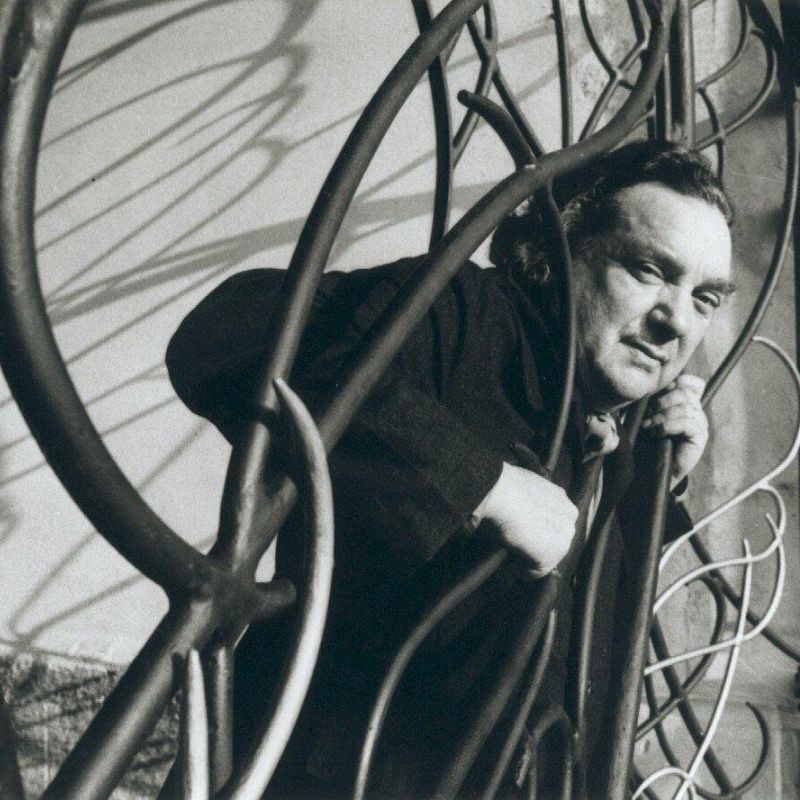
Jean Messagier (1920 - 1999): The Lyrical Painter of Nature in Motion
Jean Messagier was a major French artist of the second half of the 20th century, whose work, at the crossroads of lyrical abstraction and spontaneous figuration, celebrated nature, its landscapes, its light and its vital energies. He is renowned for his gestural, colourful painting, imbued with great freedom, in which matter and movement are in constant dialogue.
Youth and First Explorations
Born in Paris in 1920, Jean Messagier showed a keen interest in art from an early age. He studied at the Beaux-Arts de Paris and the Académie de la Grande Chaumière. His first works, in the 1940s, were still influenced by figurative art. But he soon moved away from classical representation, seeking to capture not the appearance of things, but their essence, their movement, their breath.
He took an active part in post-war artistic life in Paris, making friends with artists and critics who left their mark on the period, particularly those associated with the Galerie de France.
The Renewal of Lyrical Abstraction
It was in the 1950s that Jean Messagier developed his characteristic style, becoming part of the lyrical abstraction or art informel movement, alongside artists such as Pierre Soulages, Hans Hartung and Olivier Debré. However, his approach is distinguished by a desire to maintain a link, however tenuous, with the real world and nature. He spoke of «landscapes», «instants», or «gardens» for his canvases, not as reproductions, but as sensory interpretations.
His paintings are characterised by :
- A broad, spontaneous gesture: Messagier unleashes colour on canvas with boundless energy, using large brushstrokes, wide brushes, or even applying the paint directly.
- Bright, luminous colours: His palette is often bright, fresh and joyful, evoking the changing hues of the seasons, the reflections of water, the glint of sunlight. He is a true colourist.
- A dynamic composition: His works are imbued with movement, a vitality that suggests the wind, water and the growth of plants. The forms, though abstract, seem to be organised in an organic ballet.
- The paint is often applied in thin, transparent layers, sometimes thickened to allow the light to play with the pigments and create effects of depth.
Nature as an Inexhaustible Source
Nature is Messagier's primary source of inspiration. He doesn't copy it, but lives it, feels it, and transcribes it through «pictorial events». Whether it's the sky, water, leaves, flowers or the seasons, everything is a pretext for colourful, gestural exploration. His canvases evoke summer mornings, gardens in the rain, snowy landscapes and springtime whirlwinds.
A Polymorphic Work and a Committed Artist
In addition to painting, Jean Messagier has also explored other media:
- Engraving: He was a prolific and innovative engraver, experimenting with many techniques.
- Sculpture: He has created sculptures, often linked to nature. - Textiles: He has created tapestries and fabrics.
- Writing: Messagier was also a poet and essayist, his writing reflecting the same freedom and sensitivity as his painting.
He represented France at the Venice Biennale in 1962 and has exhibited in major galleries and museums around the world. He won international acclaim, and his work can now be found in numerous public and private collections.
Heritage
Jean Messagier died in Paris in 1999. He left behind an immense, joyous and profoundly optimistic body of work. He was able to reconcile abstraction with a form of narrative lyricism, proving that emotion and poetry could be at the heart of non-figurative painting. Through his freedom, his generosity of gesture and his constant celebration of life, Jean Messagier remains a key figure in twentieth-century art, an artist who was able to paint the invisible and the palpable with incomparable grace and energy.
 French
  English